 01 de septiembre de 2023
Translation Agency vs. Freelance Translator: A Comprehensive Analysis to Help You Make the Right Choice (ES)
La traducción llegará pronto...
When businesses require translation services, they face a fundamental strategic decision: should they work with a professional translation agency or engage a freelance translator directly? There is no one-size-fits-all answer. The right choice depends on project complexity, industry requirements, risk tolerance, deadlines, and the level of quality assurance needed.
This comprehensive analysis compares translation agencies and freelance translators across key dimensions including quality control, reliability, scalability, specialization, confidentiality, accountability, and cost. Understanding these differences helps businesses make informed decisions that align with their operational, legal, and commercial objectives—particularly in regulated markets such as the UAE.
Understanding the Core Difference
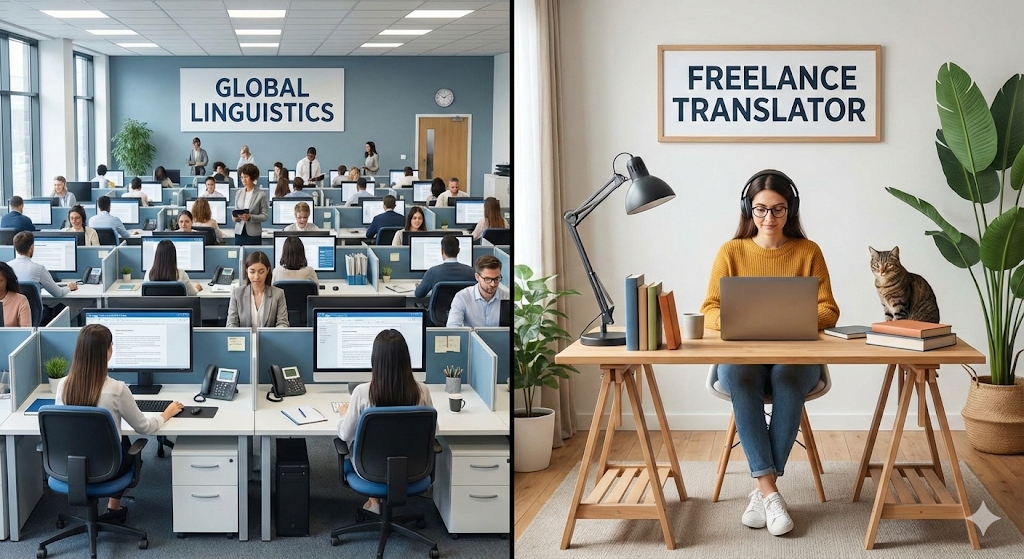
A freelance translator is an independent professional who typically works alone, managing all aspects of the translation process—from translation to revision and delivery. A translation agency, by contrast, operates as an organized structure that assigns projects to specialized translators, editors, and reviewers under a managed quality framework.
Both models have strengths and limitations, and understanding how they differ is essential before selecting a provider.
Quality Assurance and Accuracy
Translation agencies implement structured quality assurance processes. These usually include multiple stages such as translation, editing, proofreading, and final review. For legal, financial, medical, or regulatory documents, this multi-layered approach significantly reduces the risk of errors.
Freelance translators may deliver excellent quality, especially when highly experienced in a specific field. However, quality control depends entirely on one individual. Without an independent review process, the risk of oversight increases—particularly for complex or high-stakes documents.
For businesses operating in the UAE, where certified legal translation and regulatory compliance are critical, agency-based quality assurance offers a higher level of reliability.
Capacity, Scalability, and Deadlines
Translation agencies are designed to handle large volumes and urgent deadlines. They can allocate multiple translators to a single project, ensuring fast turnaround without compromising consistency. This is especially important for corporate projects, tenders, multilingual contracts, and large-scale localization initiatives.
Freelancers are limited by individual capacity. While suitable for small or medium-sized projects, they may struggle with tight deadlines or high-volume assignments. Unexpected delays due to illness or availability can also disrupt project timelines.
If speed, scalability, and business continuity are priorities, agencies provide a more resilient solution.
Specialization and Industry Expertise
Agencies typically maintain teams of translators specialized in different industries such as legal, finance, engineering, healthcare, and government documentation. This ensures that terminology, tone, and regulatory requirements are handled correctly.
Freelance translators may specialize deeply in one or two fields, which can be an advantage for niche projects. However, if a project spans multiple disciplines or languages, coordinating multiple freelancers becomes operationally complex and risky.
For cross-border business operations and multilingual documentation, agencies offer broader and more consistent expertise.
Confidentiality and Data Security
Professional translation agencies operate under strict confidentiality agreements, secure data handling protocols, and internal access controls. Many agencies comply with international data protection standards and offer contractual liability for data breaches.
Freelancers vary widely in their data security practices. While many act professionally, formal security infrastructure and legal accountability may be limited.
For sensitive documents such as contracts, court filings, intellectual property, or personal records, agency-level confidentiality and accountability provide critical protection.
Accountability and Legal Responsibility
One of the most important distinctions lies in accountability. Translation agencies assume contractual responsibility for the work delivered. They offer service-level agreements, corrective actions, and liability coverage when errors occur.
Freelancers typically operate without formal liability coverage. If a translation error results in legal or financial consequences, recourse options may be limited.
In jurisdictions like the UAE—where translated documents may be submitted to courts, ministries, or free zone authorities—working with an accountable, MOJ-recognized translation agency significantly reduces legal risk.
Cost Considerations: Short-Term vs. Long-Term Value
Freelancers often appear more cost-effective upfront. However, lower initial costs can be offset by hidden risks such as rework, delays, or rejected documents.
Agencies may charge higher rates, but they deliver long-term value through reliability, quality assurance, project management, and reduced risk exposure.
For mission-critical documents, the cost of a translation error far exceeds the price difference between a freelancer and an agency.
When a Freelance Translator May Be the Right Choice
• Small, low-risk projects
• Informal or internal documents
• Tight budgets with flexible timelines
• Projects requiring a single language and limited scope
When a Translation Agency Is the Better Choice
• Legal, certified, or regulatory documents
• Multilingual or high-volume projects
• Tight deadlines and business-critical content
• Corporate, government, or court-related submissions
• Projects requiring confidentiality and accountability
Conclusion: Making a Strategic Decision
Choosing between a translation agency and a freelance translator is not merely an operational decision—it is a strategic one. Businesses must weigh cost against risk, speed against accuracy, and short-term savings against long-term consequences.
For organizations operating in international, regulated, or multilingual environments—especially within the UAE—a professional translation agency offers structure, security, and peace of mind. Freelance translators remain valuable for limited, low-risk use cases, but when accuracy, compliance, and accountability matter, agencies provide a clear advantage.
The right choice is the one that protects your business, supports your growth, and ensures that language never becomes a liability.