 March 01, 2023
Document Attestation for Legal Translation in the UAE: A Complete Practical Guide
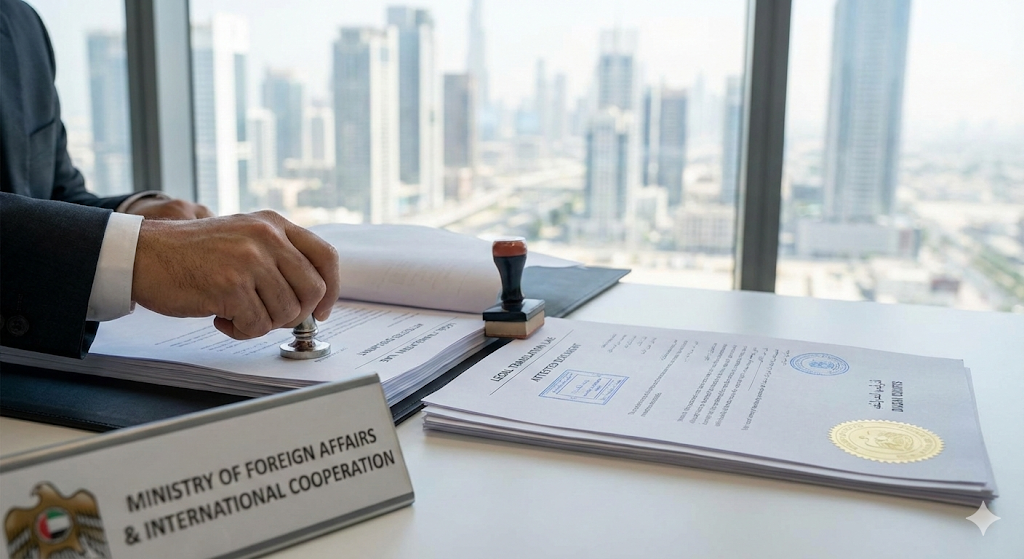
Document attestation remains one of the most misunderstood aspects of legal translation in the United Arab Emirates. Many individuals and businesses only discover attestation requirements after investing time and money into translation, resulting in delays, rejected applications, and unnecessary additional costs.
Understanding the attestation process before initiating legal translation is essential to ensure smooth document acceptance by UAE authorities and avoid costly procedural errors.
This comprehensive guide explains what document attestation is, why it matters, which documents require it, and how to complete the process efficiently alongside certified legal translation services in the UAE.
What Is Document Attestation?
Document attestation is an official authentication process that verifies the legitimacy of a document issued in one country so it can be legally recognized in another—specifically, the UAE.
Unlike notarization (which verifies signatures) or translation (which converts language), attestation validates the legal authenticity of the original document through a chain of government approvals.
Typical Attestation Chain Includes:
-
Notary Public (Country of Origin)
-
Ministry of Foreign Affairs (Country of Origin)
-
UAE Embassy or Consulate (Country of Origin)
-
UAE Ministry of Foreign Affairs (MOFA)
-
Additional UAE Authorities (if required)
Why Attestation Matters in Legal Translation
The UAE enforces strict document verification standards to prevent fraud and protect legal integrity. Even a perfectly translated document will be rejected if it lacks proper attestation.
Key Reasons Attestation Is Mandatory:
-
Establishes legal validity in the UAE
-
Ensures acceptance by courts, ministries, and banks
-
Confirms authenticity of foreign-issued documents
-
Prevents regulatory non-compliance
-
Protects parties in legal and commercial transactions
Documents That Commonly Require Attestation
Educational Documents
-
University degrees and diplomas
-
Academic transcripts
-
Professional certifications
Personal Documents
-
Birth certificates
-
Marriage and divorce certificates
-
Police clearance certificates
-
Medical reports
Commercial & Corporate Documents
-
Trade licenses
-
Articles of incorporation
-
Board resolutions
-
Powers of attorney
-
Contracts and agreements
Step-by-Step Attestation Process in the UAE
Step 1: Document Issuance & Notarization
Obtain the original document or certified copy and notarize it in the country of origin.
Step 2: Ministry of Foreign Affairs (Origin Country)
Authenticate the document at the national level.
Step 3: UAE Embassy or Consulate
The UAE verifies the document before it enters the country.
Step 4: UAE Ministry of Foreign Affairs (MOFA)
Final attestation inside the UAE.
Step 5: Additional Ministry Approval (If Required)
-
Ministry of Education (educational documents)
-
Ministry of Justice (legal documents)
Attestation vs. Translation: Correct Sequence Matters
The correct order is critical.
✅ Recommended Sequence:
-
Attest the original document fully
-
Bring attested document to the UAE
-
Obtain MOJ-certified legal translation
-
Submit original + translation together
❌ Translating before attestation often leads to rejection and rework.
“Attest first, translate second. Reversing this order is the most common and costly mistake.”
— Mohammed Al-Rashid, Attestation Specialist
Timelines & Cost Expectations
Average Timeframes:
-
Notarization: 1–2 days
-
Origin Country MOFA: 4–10 days
-
UAE Embassy: 1–3 days
-
UAE MOFA: 1–3 days
⏱ Total Average Timeline: 1–3 weeks
Expedited services exist but can cost up to 200% more.
Common Challenges & How to Avoid Them
❌ Rejected Documents
Cause: Missing stamps or incorrect sequence
Solution: Verify requirements in advance or use professionals
❌ Delays
Cause: Peak seasons, courier delays
Solution: Start early and track submissions
❌ Country-Specific Rules
Cause: Different origin country procedures
Solution: Consult attestation experts familiar with your country
Apostille vs. Attestation in the UAE
Although some countries issue Apostille certificates, the UAE still requires MOFA attestation in most cases. Apostille may simplify steps but does not eliminate UAE requirements.
Conclusion: Plan Smart, Avoid Costly Mistakes
Document attestation is not optional in the UAE—it is a legal necessity. Success depends on understanding requirements early, following the correct sequence, allowing sufficient time, and combining attestation with MOJ-certified legal translation.
When handled correctly, attestation becomes a predictable process rather than a bureaucratic obstacle—enabling smooth visa applications, court filings, company formation, and regulatory compliance.
At Cervantes Legal Translation LLC, we provide end-to-end solutions covering attestation + certified legal translation in Arabic, English, and Spanish—fully compliant with UAE regulations.